
Attorney website design for lawyers
Attorney website design for an individual lawyer has to make three things clear at once: the matters you handle, the clients you handle them for and how a prospective client gets in touch. Everything else, from your bio to your articles, exists to make that first contact feel like the right decision.
What a lawyer's website needs.
Practice areas written as matters
A list of legal categories tells a reader little. A prospective client is in a situation: selling a company, buying a competitor, bringing in an investor. We map each practice area to the matters you actually take on, describe who usually sits on the other side of the table and note the stage at which you prefer to be brought in. The reader recognizes their situation in a sentence, not in a heading. We call this the matter map, and it shapes the menu as well as the pages.
A bio that reads as judgment, not a CV
Your admissions, education and past roles belong on the page, stated exactly as they are. Above them sits a short paragraph on how you work: the kind of matter where you are most useful, how you keep a client informed and what you will tell them that others might not. We write that paragraph with you in an interview, in your words, and check it line by line with you before anything is published.
Representative matters, only as allowed
Many lawyers describe past work in general terms: the type of transaction, the sector, the role they played. Whether and how you may do so depends on the rules that apply to you and on what your clients have agreed to. Review the rules of your bar or professional body at the source before anything goes live. We design the section so it works with three entries or with none, and we never fill it with examples you have not approved.
A contact path with clear expectations
The contact page says what happens after someone reaches out: who reads the message, roughly when they can expect a reply, and what not to send before a first conversation has taken place. One phone number, one email address and one booking link if you use one. The same button sits in the header of every page, worded the same way, so a reader never wonders which door is the right one or whether a message has gone anywhere.
Articles that show how you think
A short piece on how you approach a type of deal, or the questions you ask a client before a first meeting, tells a reader more about your judgment than a list of honors. We plan a handful of pieces with you, each tied to one practice area and written to stay accurate over time. Every piece is dated, carries your name and includes whatever notice your rules call for, which you confirm at the source.
Quiet design for serious decisions
People who hire a deal lawyer or a litigator are making decisions with real consequences. The identity should feel calm and exact: a confident typeface, generous space, restrained color and no stock images of gavels, columns or handshakes. We design around your name and your way of working, so the site looks like a practice a careful client would choose rather than a template any firm in town could also be using.
Room for a practice that grows
Many lawyers start a site on their own and later bring in a partner or an associate. We decide with you at the start whether the site is about you or about the practice that carries your name. Either way, the structure allows a second profile, a shared practice areas page and separate contact routes to be added later without rebuilding the pages that already work. Each existing page keeps its address, so links you have shared keep working.
One example, in full.
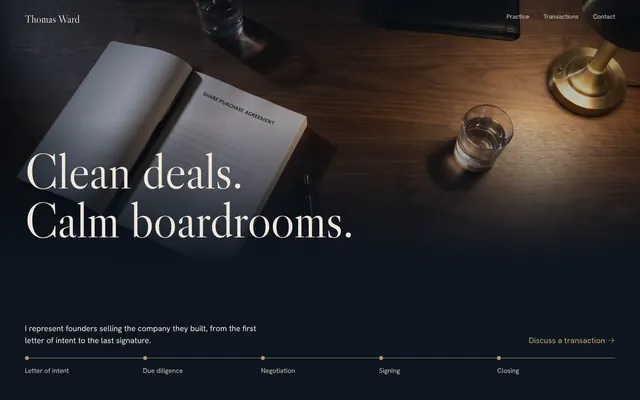
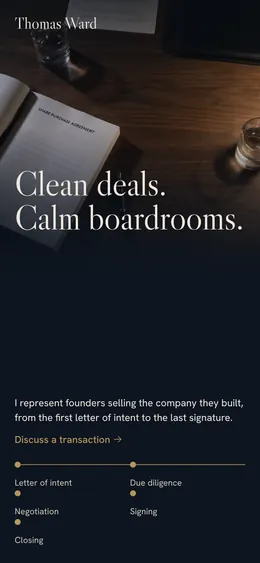
Thomas Ward M&A lawyer
Thomas Ward is a fictional M&A lawyer from our concept set, not a client. For a profile like his, we would open on the transactions he advises on, written as situations a founder or a board recognizes, place one quiet contact step on every page, and build the representative matters section so it reads well before any approved entry exists.
Website designed and built by us.
More examplesQuestions lawyers ask.
Will you write the content about the law on my site?
We write the structure, the headlines and the plain-language framing with you, from interviews and material you provide. Anything that describes the law or your services in detail comes from you and is approved by you. We do not advise on the law, and responsibility for accuracy stays with you as the professional.
Are there rules about what a lawyer's website can say?
In most places, yes, and they differ by jurisdiction and change over time. We do not summarize them. Review the rules of your bar or professional body at the source and tell us anything they require on the site; we design so that notices and wording sit naturally on the page.
Should I show client reviews on my site?
That depends on the rules that apply to you and on what clients agree to, so check at the source first. If you may and want to, we give reviews a calm place with exact attribution. If not, the site persuades through clear practice pages, your bio and your articles instead.
Can the site work for a small firm as well as for me?
Yes. We agree at the start whether the lead name is yours or the firm's. The structure then lets extra profiles and shared practice pages be added later, with every person's pages written in the same voice and built from the same parts, so the site grows without looking patched.
Do I need a page for every practice area?
Only for the areas where you want new work and can say something specific. Three focused pages, each describing real matters, serve a reader better than twelve thin ones. Areas you handle now and then can be listed together on one page without an entry of their own.
Can prospective clients book a call through the site?
Yes, if you want them to. We can link to or embed the scheduling tool you use, with a short note on what the first call covers and how to prepare. Some lawyers prefer a written inquiry first so they can check for conflicts; the site works either way.
How do you handle confidentiality in the copy?
We only use what you give us and approve. Nothing about a client, a matter or a counterparty goes on the site unless you have confirmed it can. During the project we treat your notes, drafts and interview recordings as private working material and share them with no one outside the team.
Keep reading.
- Website design for financial advisorsFinancial advisor website design should make a careful reader comfortable taking the first step. The site says who you work with, who will actually look after them, how a relationship begins and which qualifications you hold, written as plain facts. It feels steady, precise and personal, with one clear way to start a conversation.Read
- Website design for therapistsA psychologist website has to help someone who may be anxious or tired decide whether to reach out. It should say who you work with, what a first session is like, which qualifications you hold and how to book, in a calm tone that never pushes. Our therapist website design starts from that reader.Read
- Personal brand website designMessage, identity and website created as one project for experts who sell what they know, so the right people understand your work and know how to start.Read
- Speaker website designA speaker website is read by organisers comparing a shortlist and by audience members who heard you yesterday. Good speaker website design gives the first group talk pages, video and booking details in one visit, and gives the second a reason to stay in touch, so a talk today can lead to the next invitation.Read
Tell us what you practice.
Describe the matters you take on and the clients who bring them to you. We come back with a proposed scope, and nothing is agreed until you approve it.
Request a quote