
Personal website examples: 15 personal brand concepts
These personal website examples are fifteen studio concepts for coaches, consultants, speakers, advisors and specialists. Each began as one sentence about who the person helps, and each looks like nobody else on the list. Below are six questions to read any expert’s site, then the design idea behind each group.
CONCEPT EXAMPLES · FICTIONAL EXPERTS, NOT CLIENTS. Every person on this page is invented, and every website is our own design, made to show method and craft. None of them describes a real client, a real result or a real business. When client projects are published here, they will be labelled as client work.
Most galleries of personal brand website examples ask you to look at the colours and the fonts. That is the least useful thing to copy, because the same layout can work for one expert and fail for another. A better way is to read each example as an answer to a few questions, and then ask the same questions of your own site. These are the six we use.
1. Who is the first screen talking to? Find the one reader the opening sentence is written for. If you cannot name them, neither can a visitor. A strong personal website names a role, a moment or a problem, not a list of everyone the expert could possibly help.
2. What would a stranger repeat after one read? Cover the page after five seconds and try to say what this person does. The sentence you remember is the positioning. If what you remember is a slogan with no subject, the site looks finished but has not yet said anything.
3. Where is the one next step? Look for the action the site wants, whether a call, an enquiry about a date or a request for a quote. Count how many different actions compete with it. On the strongest personal websites there is one, and it reads the same wherever it appears.
4. Which proof sits next to which claim? Notice where evidence appears. Good sites place a quote, a role held or a past stage beside the sentence it supports, so a doubt is answered at the moment it arises rather than on a separate page nobody opens.
5. Does the design carry an idea, or only a style? Ask whether the visual choice says something about the person. A layout built like a front page says something about an expert whose work starts with what matters most. A pleasant template says only that someone chose a template.
6. Would it still work for the second reader? Many experts are found by one person and hired by another: a sponsor, a committee or a board. Check whether the page could be forwarded with one line and still make sense to someone who never searched for it.
What these examples cannot tell you. A concept has no traffic, no enquiries and no client feedback behind it, so read it for the decisions it makes, not for outcomes. The portraits are illustrations, not photographs of real people, and your own site should use real photographs of you. Each concept is also designed for one invented person: borrowing its layout without its reasoning gives you the look of an idea without the idea itself.
Use the questions in order. If an example fails the first one, the other five rarely matter. Then turn them on your own site, write down your answers in one line each, and you will have a short brief for what to change, whether or not you work with us.
Coaches
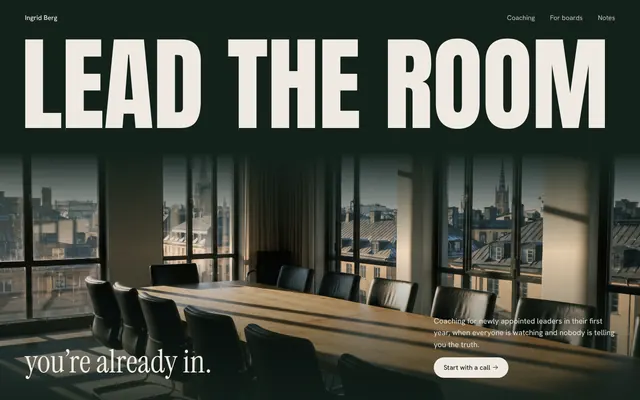
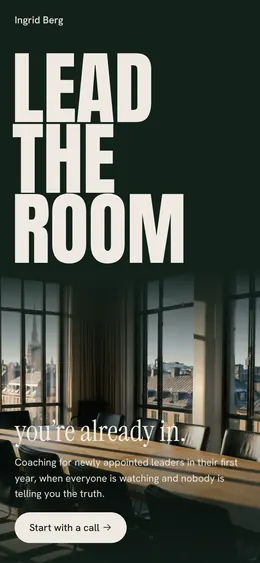
A coaching site succeeds when a reader recognises their own moment. Ingrid Berg, a fictional executive coach, gets LEAD THE ROOM over the boardroom: one sentence for leaders in their first year and one next step, a call. The design decision is restraint, so nothing competes with the booking.
Consultants
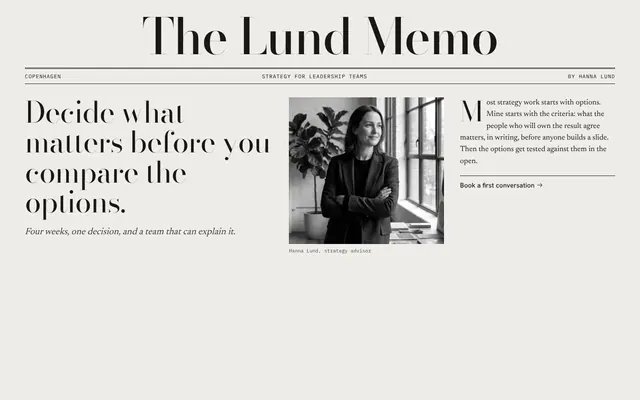
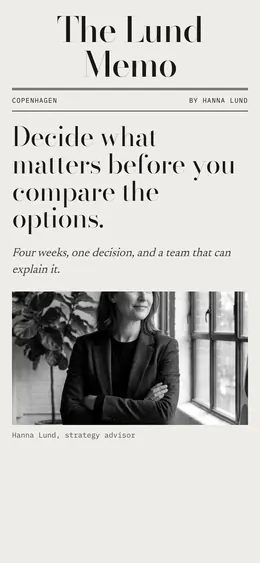
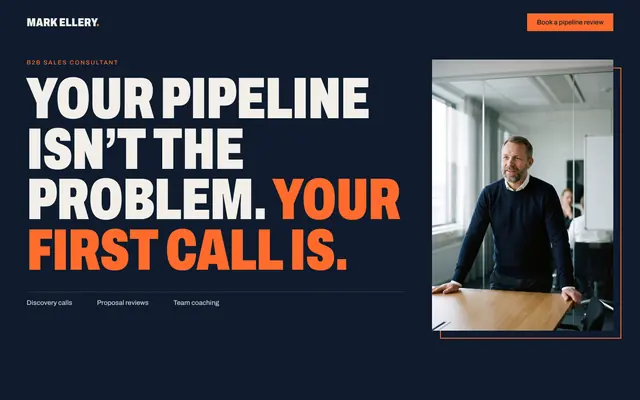
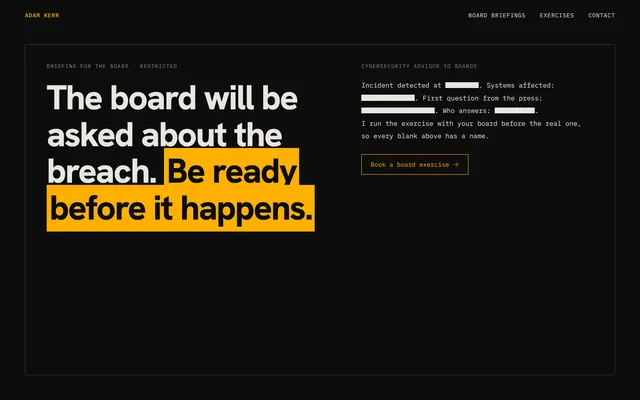
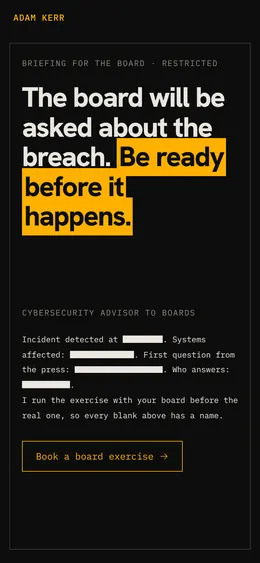
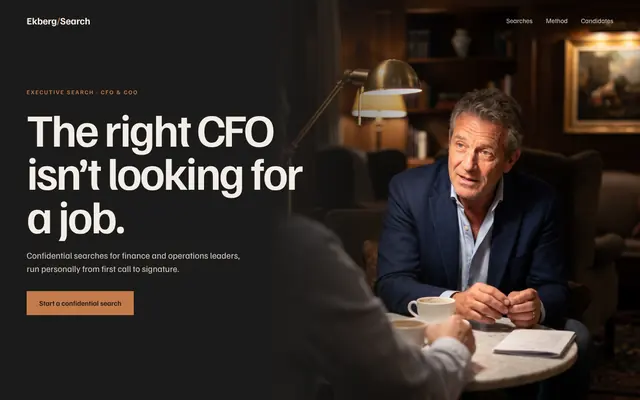
Consultants are hired for a problem, so each design starts from what the buyer needs to read first. Hanna Lund’s site is a front page because her strategy work starts with what matters most. A sales consultant, a cybersecurity advisor to boards and an executive search specialist each face a different buyer, so each concept takes a different form.


Speakers
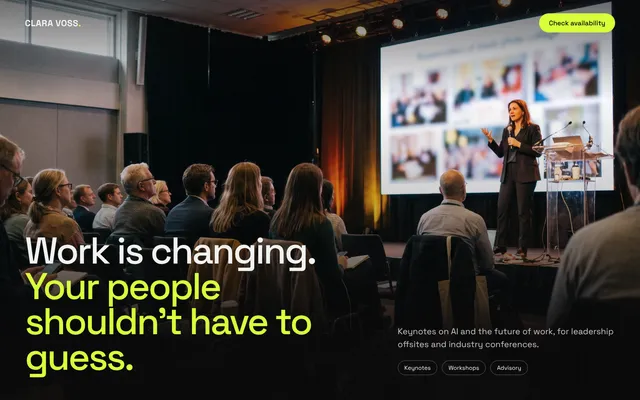
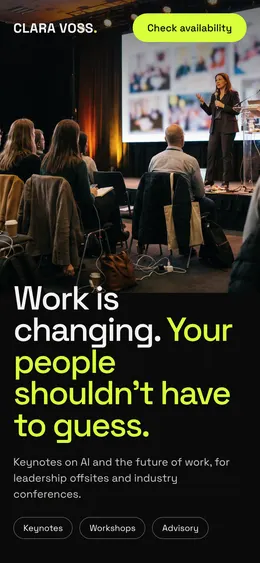
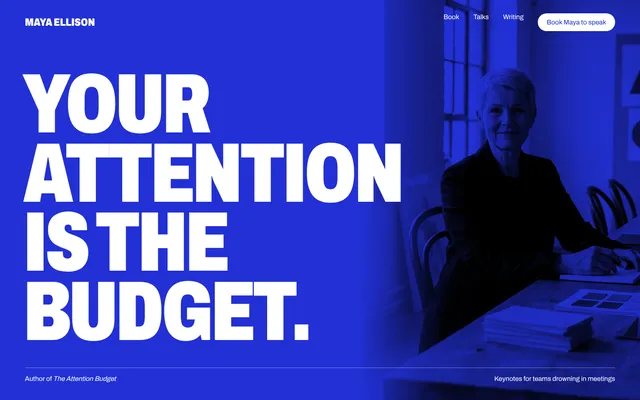
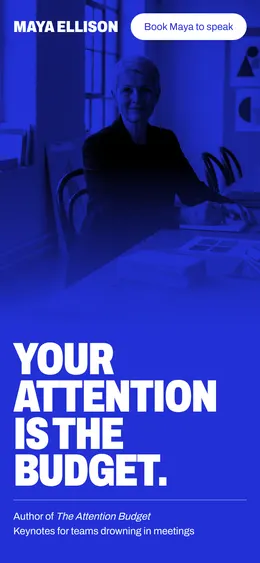
Speaker sites are read by organisers in a hurry. Clara Voss, a fictional keynote speaker, leads with keynotes on AI and the future of work, with availability one click from the first screen. Maya Ellison is an author and speaker, so her concept has to hold a book and a stage on the same page without either one fading.
Advisors
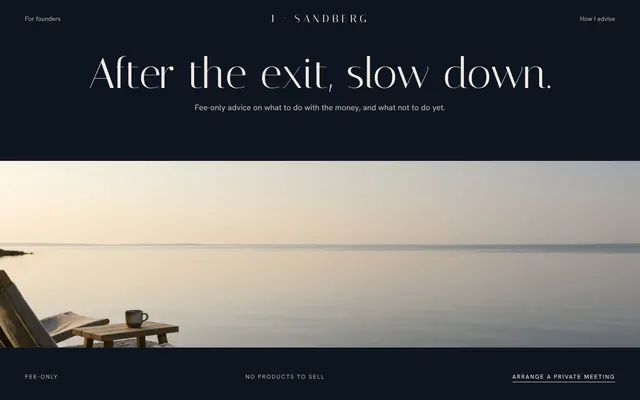
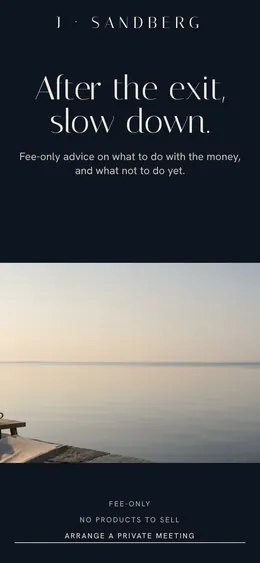
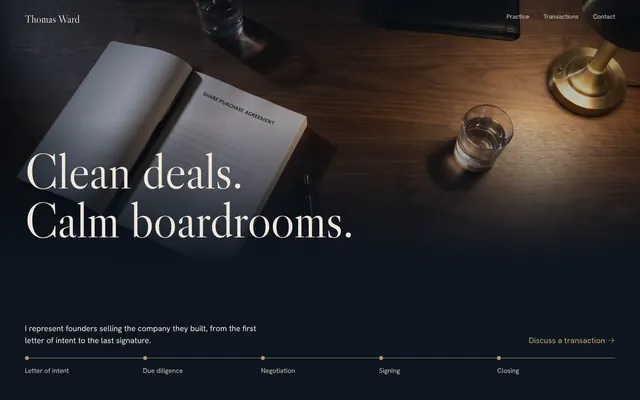
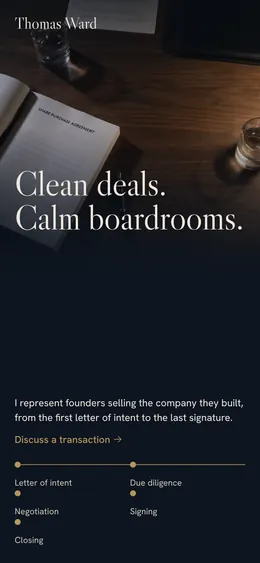
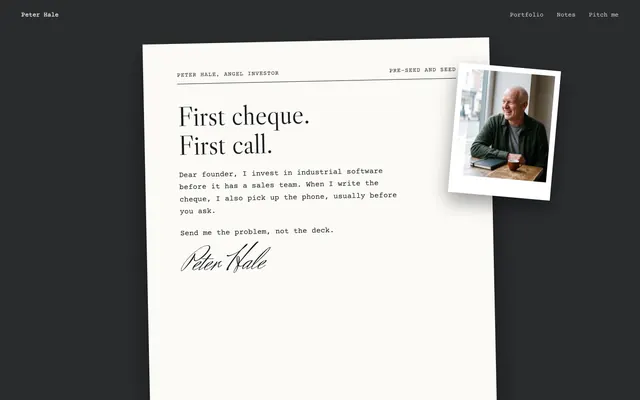
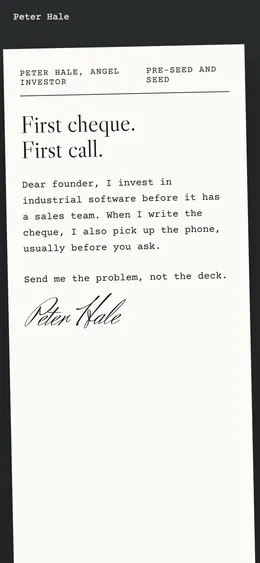
A wealth advisor, an M&A lawyer and an angel investor sell discretion as much as expertise. The design problem for this family is to show judgement and seriousness while saying less than other experts would, so the first screen carries one calm statement and the proof is chosen carefully rather than piled up.
Leaders and specialists
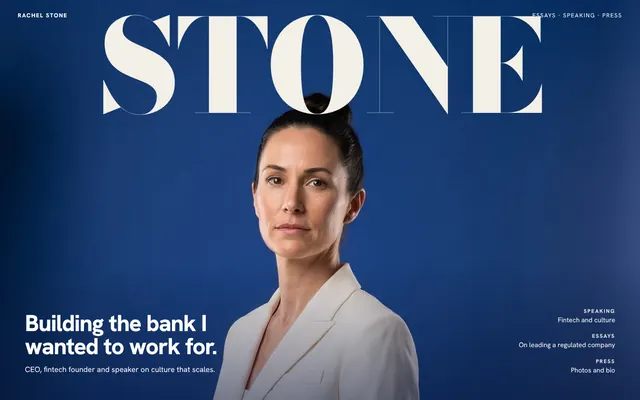
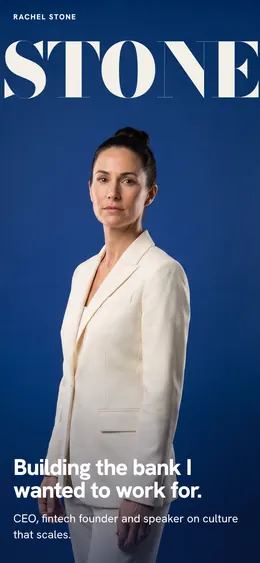
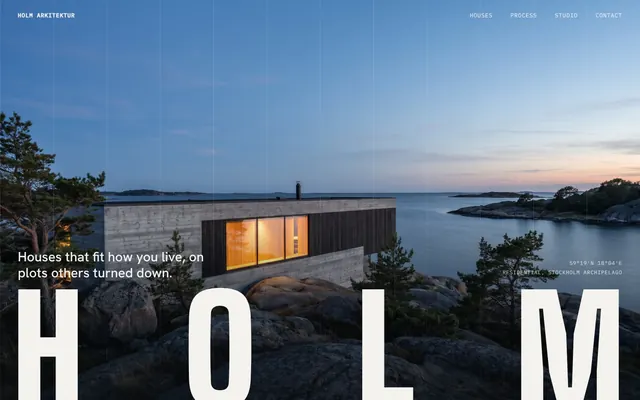
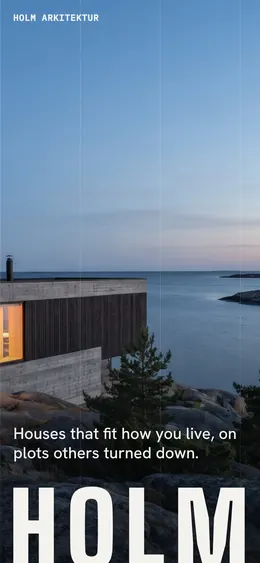
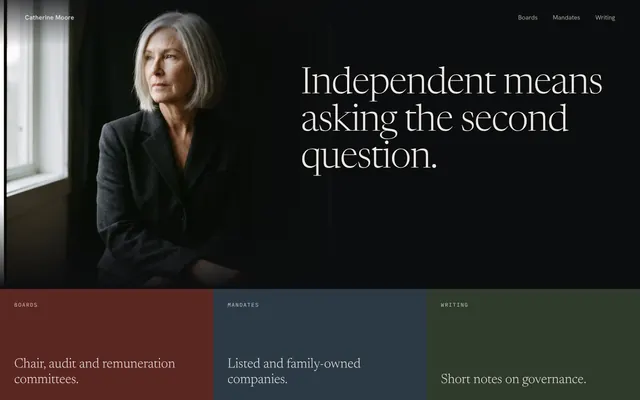
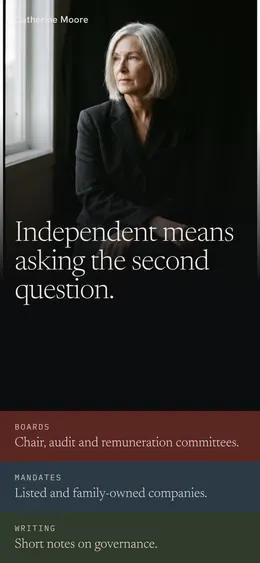
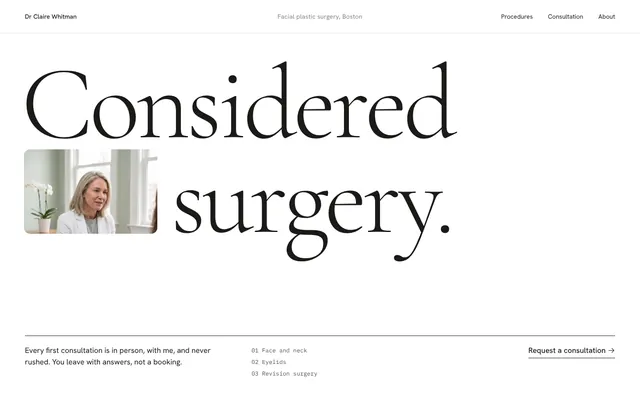
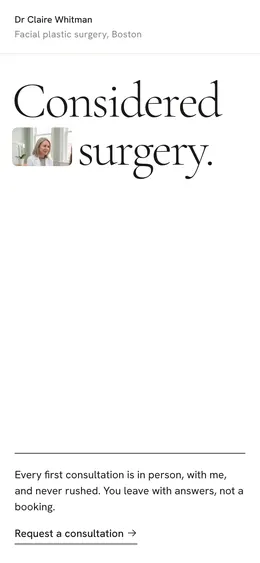
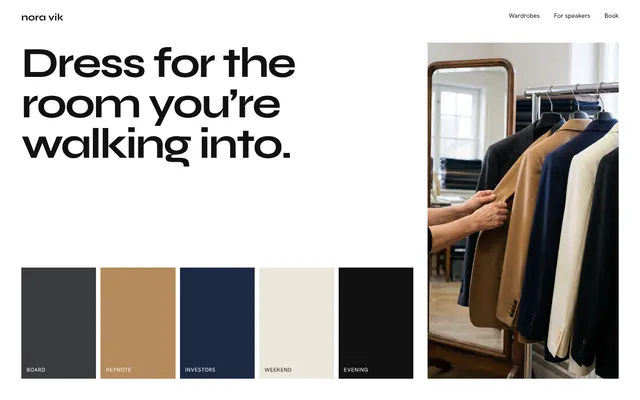
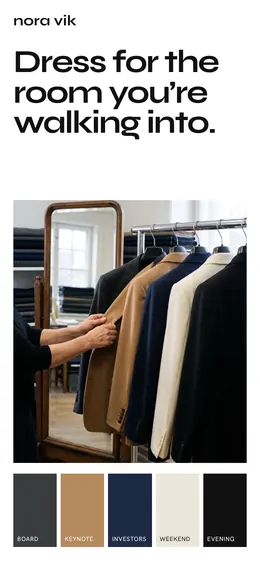
This family shows how far one method stretches. Rachel Stone, a fictional CEO, gets a magazine cover, for a founder the press already calls. Erik Holm, an architect, has his name built like a house, set on the plot others turned down. A board director, a facial plastic surgeon and an executive stylist each need their own form for the same reason: the idea comes from the person, not from a template.
Keep reading.
- Personal brand website designMessage, identity and website created as one project for experts who sell what they know, so the right people understand your work and know how to start.Read
- Speaker website designA speaker website is read by organisers comparing a shortlist and by audience members who heard you yesterday. Good speaker website design gives the first group talk pages, video and booking details in one visit, and gives the second a reason to stay in touch, so a talk today can lead to the next invitation.Read
- Website design for authorsA writer website gives readers, organizers and journalists one place to find your books, learn who you are and reach you. It shows the current book first, makes buying it one click away, offers a press page that answers questions before they are asked and invites readers onto your mailing list.Read
- Website design for coachesA coach website works when the right reader recognises their situation in the first sentence, sees how your coaching runs and finds one clear way to book a first call. Life, executive and business coaches need different paths to that call, so we design the path for the person who actually decides to hire you.Read
Your field is not on the list?
The method is the same for any expert who sells their judgement. Tell us what you do and we will show you how it applies.
Request a quote