
Writer and author website design
A writer website gives readers, organizers and journalists one place to find your books, learn who you are and reach you. It shows the current book first, makes buying it one click away, offers a press page that answers questions before they are asked and invites readers onto your mailing list.
What a writer's website needs.
The current book on the first screen
The reader who types your name has usually heard about one book. Put that book first: cover, title, a two-line pitch written for someone who has never met you, and a button to buy it. Earlier titles move to a books page where each keeps its own short description and buying links. When a new book comes out, it takes the first screen and the previous one steps down a shelf. We plan that rotation at the start, so a launch means editing one entry, not redesigning a page.
A page for every book
Each title deserves a page a reader can land on directly: cover, a longer description, an opening excerpt if you choose to share one, the formats it comes in, and generic buying links that send people to the store they prefer. A short line under each format tells the reader what they are choosing. These are also the pages a journalist or event organizer will share, so each one carries the book's details in plain text, never only inside an image.
A bio in three lengths, side by side
Organizers, hosts and editors ask for different lengths. The about page carries a long version for readers who want the story, a medium paragraph for event programs and a single line for introductions. All three say the same true things in the same order: what you write, who it is for and the thread that runs through your books. Each length sits in its own copyable block, so nobody trims your words and loses the point on the way. Our Author bio examples guide covers the writing itself.
A press page in the order an editor works
The press page is where a journalist decides whether to cover you. It holds your bios, approved author photos in print and screen sizes, high-resolution covers, a short list of subjects you can speak about with confidence, past interviews you are glad to point to, and one contact for press. Everything downloads without an email exchange. We arrange it in the order a busy editor works through it: who you are, what is new, what to show and whom to write to.
A mailing list with a reason to join
"Sign up for my newsletter" gives a reader nothing to want. A short promise works better: what you send, how often, and one thing kept for subscribers, such as an early chapter, notes from behind a book or the first word on a new release. The sign-up appears where a reader has just finished something: below an excerpt, at the end of a book page, after an article. It connects to the email tool you already use and moves with you if you change it.
Speaking and events, kept apart
If you also speak, readers and organizers want different things. Readers want the next place they can meet you; organizers want talk titles, formats and how to book. We give events a simple dated list and give speaking its own page with each talk described in a few lines and a clear way to ask about availability. Past events stay visible as a record, marked as past, so the site never looks abandoned in the months between one book and the next.
An identity built for the fifth book, not the first cover
A site dressed in the colors of the latest cover ages the day the next book arrives. We build your identity around your voice as a writer: the type, the tone of the headlines, the pace of the pages. Covers then sit inside that frame like books on a well-made shelf, each with its own art, and the site still feels like yours when the fifth title joins the first. Your name, not a single jacket, is what holds it together.
One example, in full.
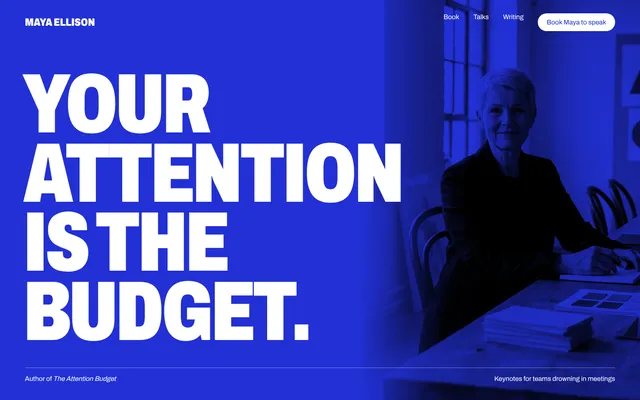
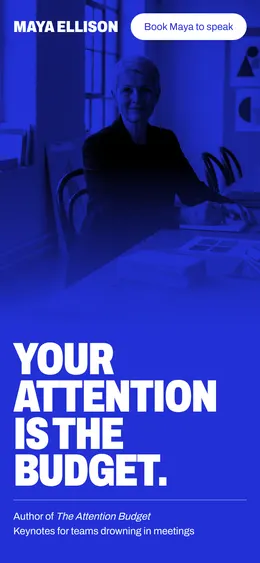
Maya Ellison Author and speaker
Maya Ellison is a fictional author and speaker from our concept set, not a client. For a profile like hers, we would open on two clear paths from the first screen, one for readers and one for event organizers, so each finds their next step without reading the other's page, and keep the press page one click from both.
Website designed and built by us.
More examplesQuestions authors ask.
Should my author website use my name or my book's title?
Your name, in almost every case. Books come and go from the first screen; your name stays the address readers remember and type. Each book then gets its own page on that site. A separate site for one title makes sense mainly for a series with a world of its own, and even then we link it clearly back to you.
I have not published yet. Is it too early for a writer website?
Not if you have something true to show: the book you are writing, where your work has appeared, and a way for interested readers to follow along. A small site with a clear page about the work in progress and a mailing list sign-up can grow into the full shelf once the book is out.
Can readers buy my books directly on the site?
The site can link each format to the stores where it is sold, and it can connect to a shop if you sell signed copies or bundles yourself. We set up whichever route you already use and keep the buying button in the same place on every book page, so readers learn where to look.
Do you help with publishing, editing or cover design?
No. We design your message, your identity as an author and your website. The book itself, its editing and its covers stay with you and the people you publish with. What we do is design the site so that any cover you bring, now or later, sits well inside it.
What should I prepare before the project starts?
A list of your books with their details and buying links, any bio you already use, author photos you own, cover files, and a short note on who your readers are. If something is missing, we tell you what matters for launch and what can wait until after.
Can I update the site myself when a new book comes out?
Yes. Adding a book means filling in one entry: cover, title, description, formats and links. The new title takes the first screen and the previous one moves to the books page. We show you how before handover, and we can make the change for you if you prefer.
Do authors need a blog?
Only if you will keep it going. A few pieces that show how you think about your subject, or what sits behind a book, help readers and journalists alike. An archive that stops after three posts suggests the opposite. We plan a small number of pieces you can sustain and place them near the mailing list.
Keep reading.
- Website design for podcastersA podcast host website is where listeners, guests and partners find the show and the person behind it. It says what the show is about in one line, makes the latest episode easy to open, explains how guests can pitch themselves and gives press a kit they can use without writing to you.Read
- Website design for creatorsAn influencer website is the one place online that you own. It gathers what you already make on other channels, says what you are about in a sentence, gives brands a clear collaboration kit with no figures to go stale, and asks your audience onto a mailing list you control.Read
- Personal brand website designMessage, identity and website created as one project for experts who sell what they know, so the right people understand your work and know how to start.Read
- Speaker website designA speaker website is read by organisers comparing a shortlist and by audience members who heard you yesterday. Good speaker website design gives the first group talk pages, video and booking details in one visit, and gives the second a reason to stay in touch, so a talk today can lead to the next invitation.Read
Tell us about your books.
Share what you write, who reads it and what the site should do for your next release. We come back with a proposed scope, and nothing is agreed until you approve it.
Request a quote